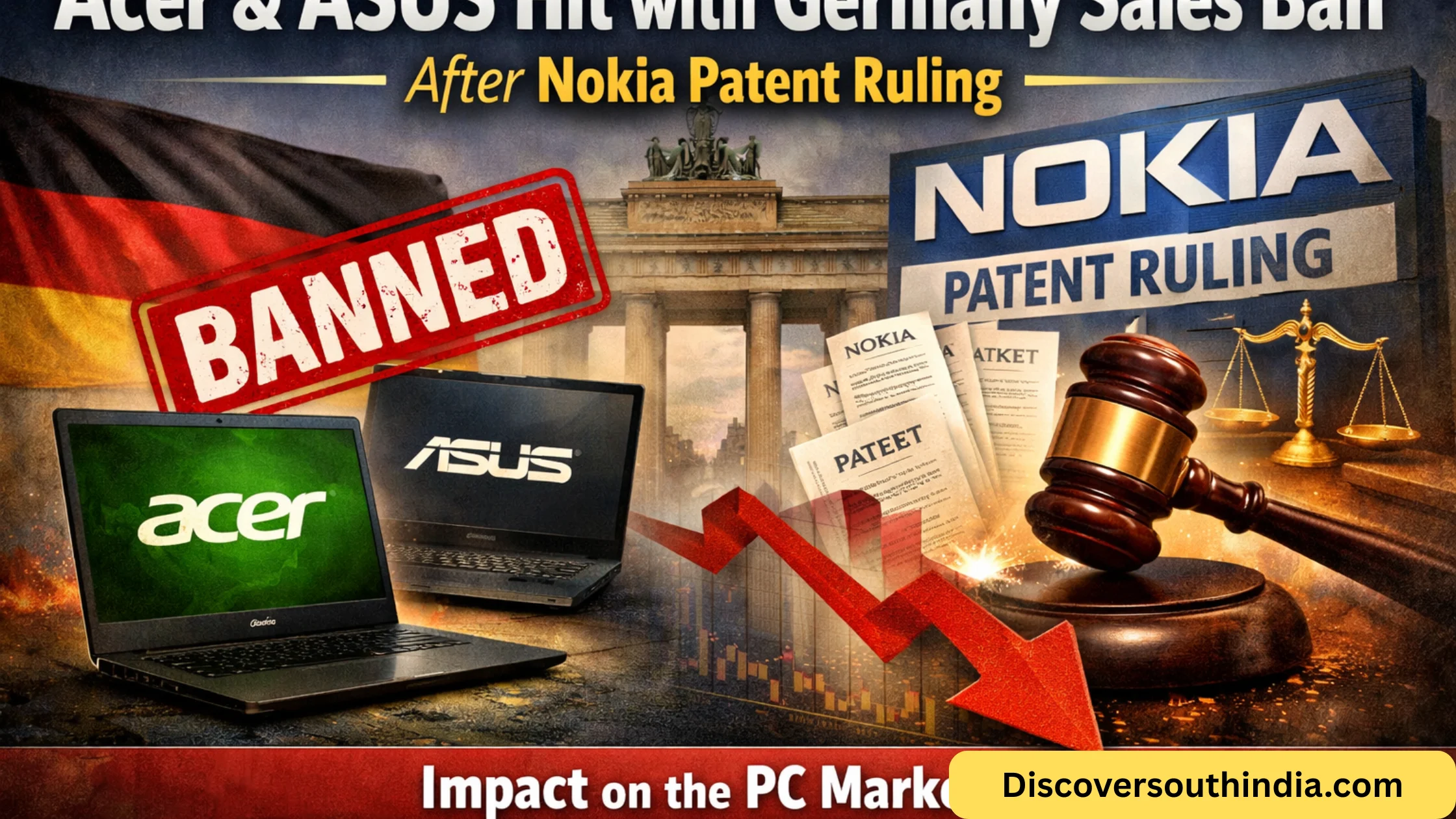
Acer & ASUS Hit with Germany Sales Ban After Nokia Patent Ruling – What It Means for the PC Market
Date: February 16, 2026
In a significant development in global tech and intellectual property law, Taiwanese computer manufacturers Acer and ASUS have been barred from selling their laptops and desktop PCs in Germany after a German court ruled against them in a patent dispute with Finnish telecommunications giant Nokia.
German Court Orders Immediate Ban
The Munich I Regional Court ruled on January 22, 2026, that both Acer and ASUS had violated Nokia’s patents related to the widely-used H.265 video codec — also known as HEVC (High Efficiency Video Coding) — by failing to secure licensing terms that met the FRAND (Fair, Reasonable, and Non-Discriminatory) standard.
Under this ruling, both companies are prohibited from selling, importing, marketing, offering, possessing for commercial purposes, or otherwise distributing infringing PCs and laptops within Germany.
According to the court’s decision, Acer and ASUS did not show sufficient willingness to negotiate fair licensing terms with Nokia for its standard-essential patents — a legal requirement when using patented technology that underpins everyday electronics.
Why the Ban Happens: The HEVC Patent Dispute
The HEVC standard is a foundational video compression technology used for streaming high-resolution video, video conferencing, media playback, and many other applications in modern PCs. Nokia owns key patents on this technology and licenses them to companies globally.
Nokia argued that Acer and ASUS were infringing its HEVC patents without obtaining a license on FRAND-compliant terms. Since these patents are classified as Standard Essential Patents (SEPs) — meaning anyone must license them to produce compatible hardware — German law requires that licensing negotiations be conducted on fair terms.
The court’s injunction granted Nokia injunctive relief, effectively halting new sales by these manufacturers until the licensing issue is resolved or the ruling is overturned on appeal.
What This Ban Means in Practice
Although the ban applies to direct sales by Acer and ASUS, it does not immediately remove existing stock from German shop shelves. Retailers and third-party sellers can still sell remaining inventory. As a result, consumers in Germany can still buy Acer and ASUS machines — for now — until stocks run low.
However, Acer’s German online shop has already pulled affected products and confirmed the suspension of direct online sales. ASUS’s German site is similarly offline, reportedly for maintenance as the company navigates the legal crisis.
Industry and Consumer Impact
The ruling represents a significant disruption in a major European market for two of the world’s largest PC makers. Acer and ASUS together hold sizable shares in gaming, consumer, and business PC segments, especially with popular models such as gaming laptops and ultrabooks.
Market analysts predict that if the ban persists, shortages of Acer and ASUS machines could emerge in Germany, potentially driving consumers toward rival brands like HP, Dell, Lenovo, or Apple — or pushing higher resale values for remaining stock.
For Germany, a tech-savvy nation with one of Europe’s largest PC markets, the situation highlights how patent enforcement and licensing frameworks can influence product availability and corporate behavior. A similar pattern has previously affected companies like OnePlus and Amazon in the same jurisdiction after losing patent cases to Nokia.
What the Companies Say
In response, Acer stated that it respects others’ intellectual property rights and is exploring legal options and negotiations to resolve the dispute as quickly as possible. ASUS has not yet released a public statement but is believed to be reviewing its next steps, possibly including appeals or fresh licensing negotiations.
Nokia, meanwhile, insists that litigation was a last-resort measure and affirms its preference for amicable licensing agreements. The company points to more than 250 patent licensing deals it has previously reached with global technology firms.
Looking Ahead
This ruling underscores the complex interplay between technology innovation, intellectual property law, and international commerce. As the dispute proceeds through appeals or settlement discussions, global PC buyers and industry watchers will closely monitor whether Acer and ASUS can return to the German market — and if this case sets a precedent for other countries with strong patent enforcement.
Read Also: India National Cricket Team vs Pakistan National Cricket Team Standings

Daksh Sharma writes about South India tourism, covering destinations, travel tips, and offbeat places. His goal is to make travel planning easy, informative, and enjoyable.